These walnut pedas are super rich and delicious, with a nutty flavour from toasted walnuts, a soft melt-in-your-mouth texture, and an aromatic hint of saffron and cardamom.
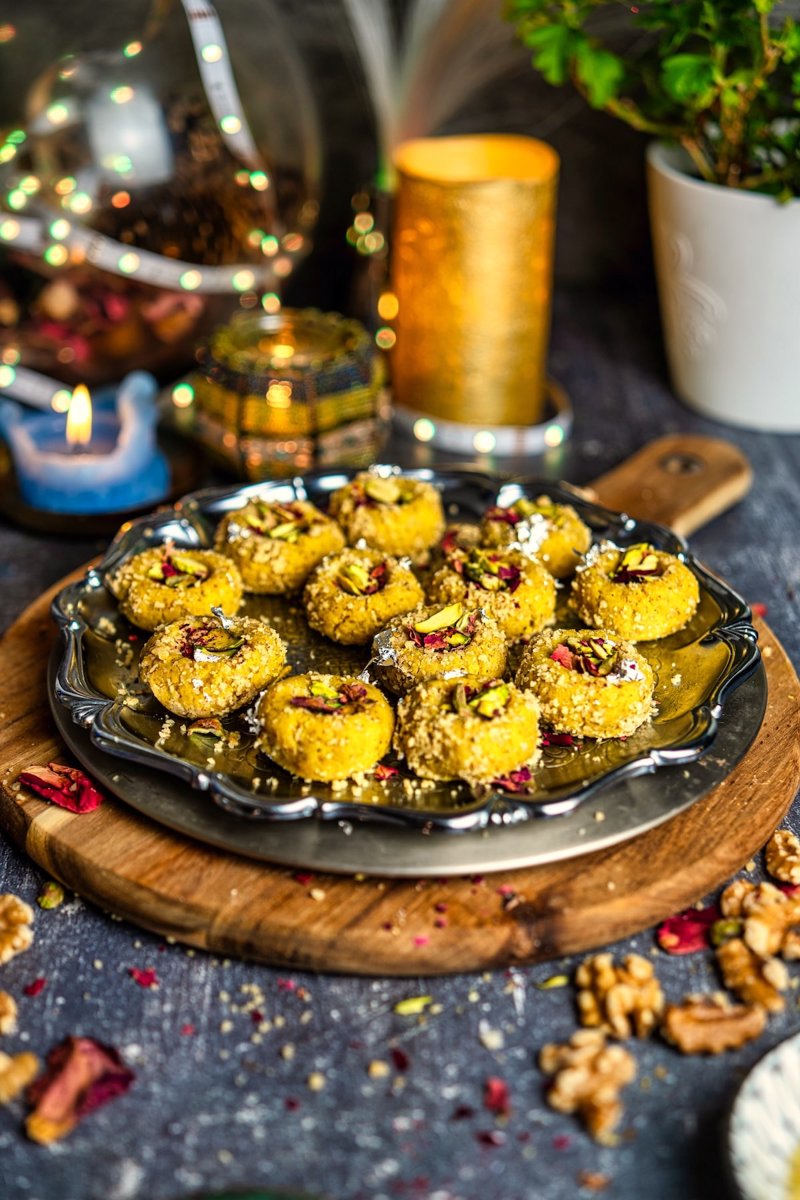
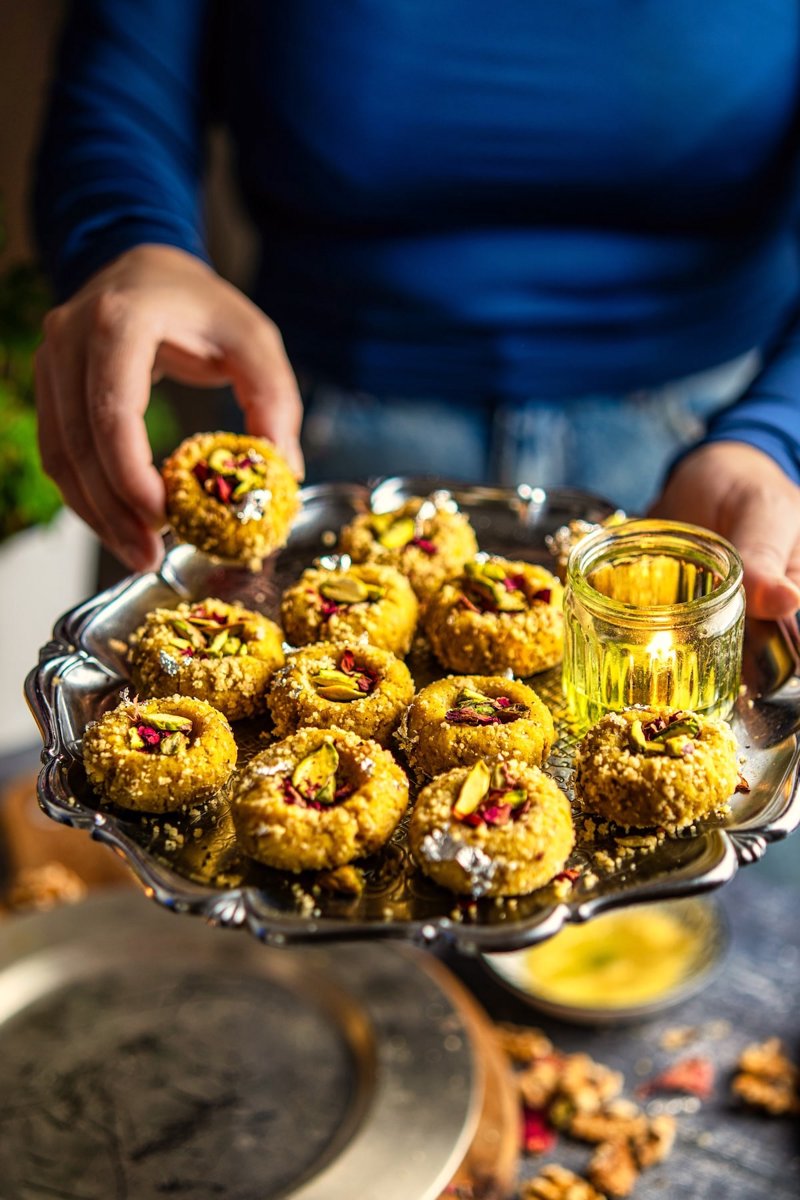
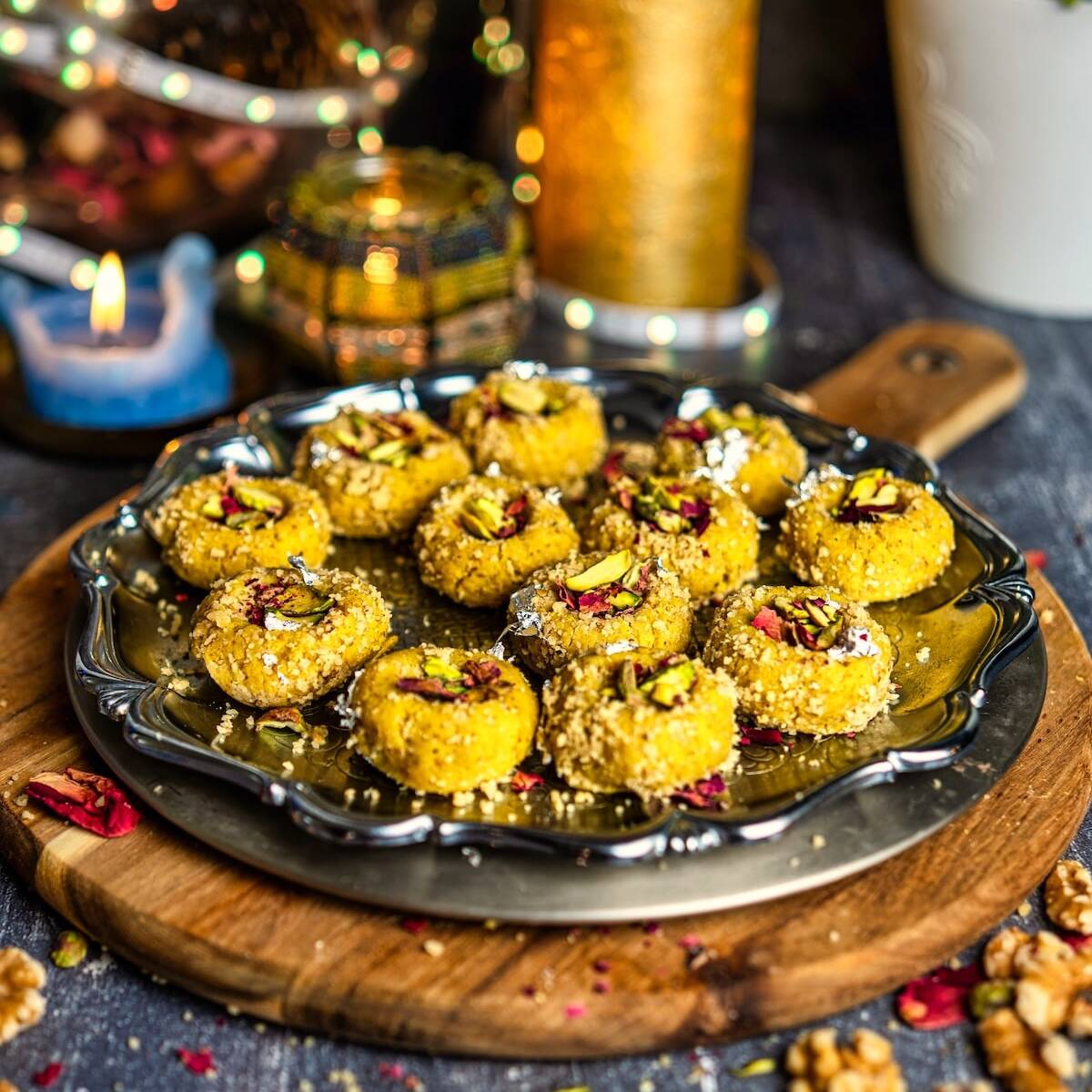
Coated in finely ground walnuts and garnished with sliced pistachios and dried rose petals, they look just as beautiful as they are indulgent to taste.
The delicious mix of walnuts, milk powder, ghee, saffron-infused milk, and cardamom gives these homemade walnut peda a lovely Indian mithai flavour without any need for mawa, aka thickened milk.
Peels, ends, and stems make flavorful broth. Freezing lets you collect enough for a pot anytime.
Don’t want to miss such incredible time-saving tips from My Ginger Garlic Kitchen, set us as a preferred source in Google Search by clicking the button below.

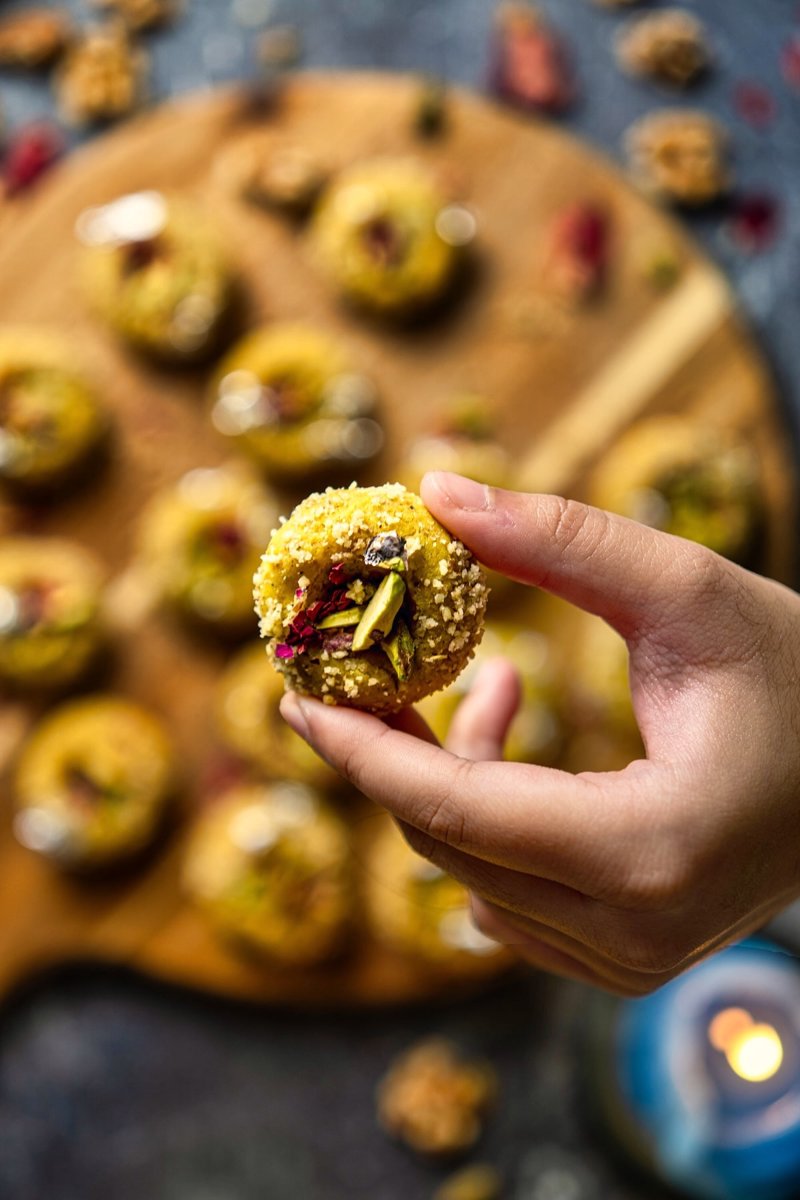
Table of contents
The walnut coating here adds a delicate nutty finish, while the colourful pistachio and rose garnish gives each peda a lovely contrast and makes them look extra special for any festive season.
If you enjoy Indian sweets but find them hard to make at home, these homemade walnut pedas are here for you, with the ease of making and loads of walnutty goodness.
So make these fail-proof walnut peda at home to bring a lovely twist to traditional peda. They are perfect for Diwali, Holi, festive gatherings, gifting, or anytime you are craving a fancy homemade sweet with a milky and nutty flavour.
These pedas also make thoughtful homemade gifts for family and friends.
About Walnut Peda
Walnut peda, or Indian walnut fudge, is a delicate and delightful milky dessert bite packed with milky and nutty flavour that makes it different from traditional milk peda. Here, finely ground toasted walnuts are mixed into a saffron-infused milk powder base to create a rich Indian sweet flavoured with aromatic cardamom.
It uses simple, handy ingredients and does not require khoya or mawa. The saffron adds a delicate aroma, while the cardamom brings the familiar fragrance of Indian mithai. The result is a nutty, aromatic peda with a beautiful festive finish.
These walnut peda are ideal for Diwali, festive gifting, or adding something different to your homemade sweets platter.
Peda is a common name for a traditional Indian milk confection. Making this peda is very simple and easy. Unlike traditional peda recipes that are made with khoya or mawa, this version uses whole milk and milk powder to make the peda base.
The milk mixture is cooked with sugar, milk powder, and saffron-infused milk until it slightly thickens, then it is mixed with ground walnuts, ghee, and cardamom to make a soft, dough-like mixture that is easy to shape.
The garnish is what makes these homemade walnut peda extra special. Each peda is lightly coated in finely ground walnut powder before a small cavity is pressed into the centre.
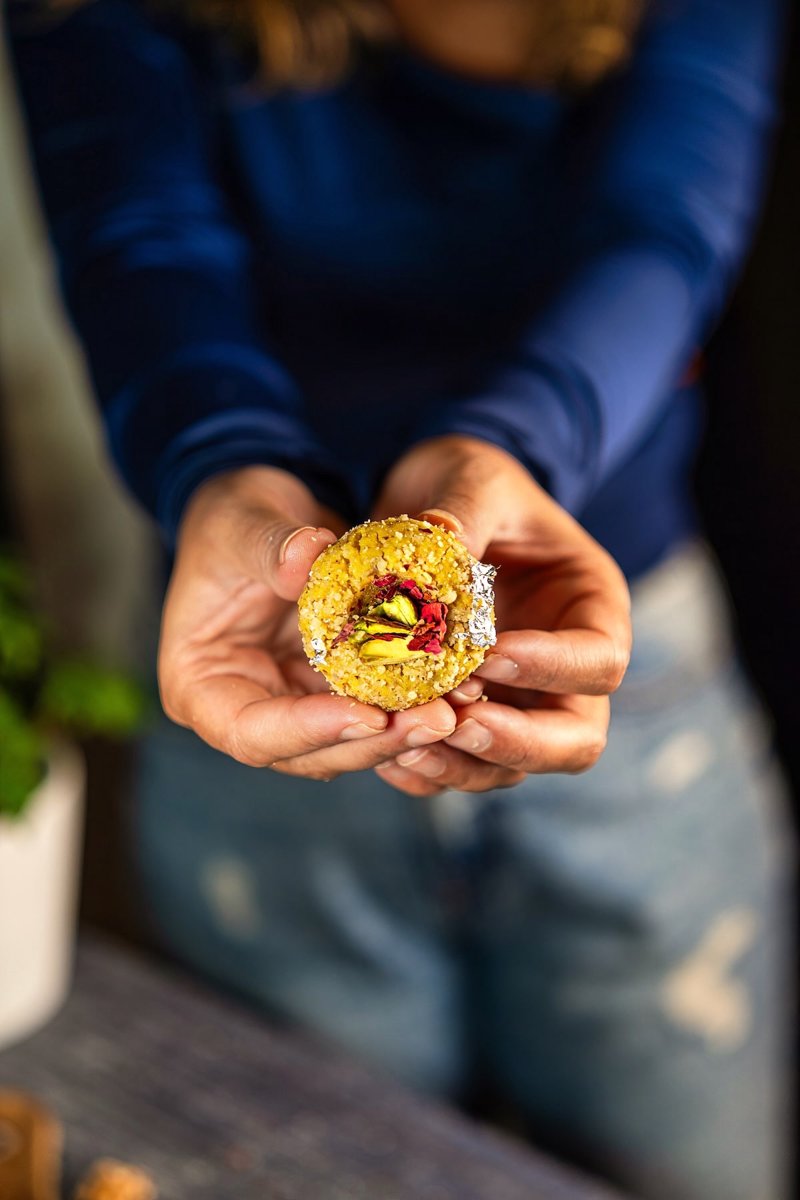
I garnished them with a few dried rose petals to add a delicate floral note, and the chopped pistachios bring lush green colour and a little nutty texture to each bite. Chopped pistachios and dried rose petals fill the cavity, creating a lovely contrast of green and pink.
Together, when combined with some edible silver or gold leaves, these walnut pedas make a beautiful addition to any festive mithai platter.
They look lovely when served alongside other homemade bite-sized nut-based Indian sweets, such as walnut burfi, kaju katli, peanut katli, badam burfi, or any other traditional mithai.
You can also pair them with other Indian sweets like rasmalai ladoo, rose badam ladoo, rava ladoo, or besan ladoo for a festive dessert platter.
If you enjoy eating peda recipes but want to try something unique from the usual milk peda, this walnut peda recipe is a wonderful choice.
So, are you ready to make these pretty walnut peda?
Why You’ll Love the Recipe
These Walnut Peda
✔️ use simple ingredients
✔️ are rich and nutty
✔️ are loaded with walnuts
✔️ have a saffron and cardamom aroma
✔️ have a melt-in-your-mouth, smooth texture
✔️ are made without khoya or mawa
✔️ are great for gifting and sharing
✔️ are easy to customize
✔️ make a lovely Indian festive sweet
✔️ are ideal for Diwali and other festive occasions
## Ingredients
For making these pedas, you will only need a handful of simple ingredients.
For the Walnut Peda
-
Walnuts: They are the star ingredient in this recipe. They give these peda their rich, nutty flavour. I recommend using toasted walnuts to bring out their flavour. If you don’t have toasted walnuts, then toast them in a pan and let them cool completely before grinding them into a fine powder. Just make sure that you make a fine powder, but avoid over-processing, as over-processing can release oil and turn them into a paste. Reserve 2 tablespoons of the ground walnuts for coating the finished peda. If you have toasted walnut flour, that works just fine as well.
-
Whole milk: It forms the base of the mixture and helps give it moisture and bind the milk powder and sugar.
-
Milk powder: It is an essential ingredient when you want to replace mawa and save time on cooking. It gives the peda their milky fudge flavour and helps the mixture thicken into a soft, shapeable consistency.
-
Sugar: To sweeten these pedas, I used granulated sugar, but you can also use other sweeteners of your choice. You can use jaggery, brown sugar, palm sugar or coconut sugar. They all work fine here; just keep in mind that every sweetener has a distinct flavour, colour and taste. The sugar proportion I used in this walnut peda balances the nutty flavour of the walnuts; feel free to add more or less depending on your taste preference.
-
Ghee: A little amount of ghee is added towards the end to give these pedas richness and the familiar flavour of Indian mithai.
-
Saffron strands: A few saffron strands are crushed and infused with warm milk. They add a delicate aroma, subtle golden colour and a luxurious touch to the peda.
-
Ground cardamom: It adds a lovely dessert aroma to give it a warm, sweet fragrance that blends beautifully with walnuts and saffron.
For Garnishing
-
Sliced pistachios: For the final garnish, I like to add some sliced pistachios to add a nutty texture and a lovely green colour to the centre of each peda.
-
Dried rose petals: They are an optional ingredient, but they make them look really pretty. The pink or red hues of dried rose petals add a lovely contrast to golden-coloured pedas and pistachio garnish. They also enhance the delicate floral notes. Make sure to use the edible dried rose petals intended for culinary use.
-
Edible silver or gold leaf: This is an optional ingredient, but if you want your pedas to look as if you got them from a confectioner’s shop, add some edible gold or silver leaf. They give the finished walnut peda an elegant, festive appearance.
How to Make Walnut Peda
Making walnut peda at home is really simple and straightforward. The only key here is to grind the walnuts properly and cook the mixture until it reaches the right consistency for shaping.
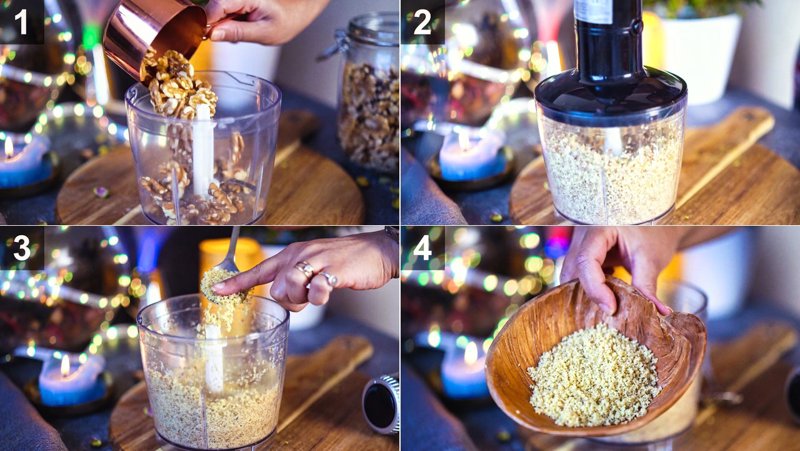
- Start by adding the toasted walnuts to a blender and grinding them into a fine powder. Reserve 2 tablespoons of finely ground walnut powder for coating the finished peda.
- If you are using untoasted walnuts, then I suggest you toast them in a pan over low heat for 2–3 minutes, stirring frequently. Let them cool completely before grinding. Alternatively, you can also toast the walnut powder in a pan for a few minutes, remove it from the pan and let it cool while you prepare the milk mixture.
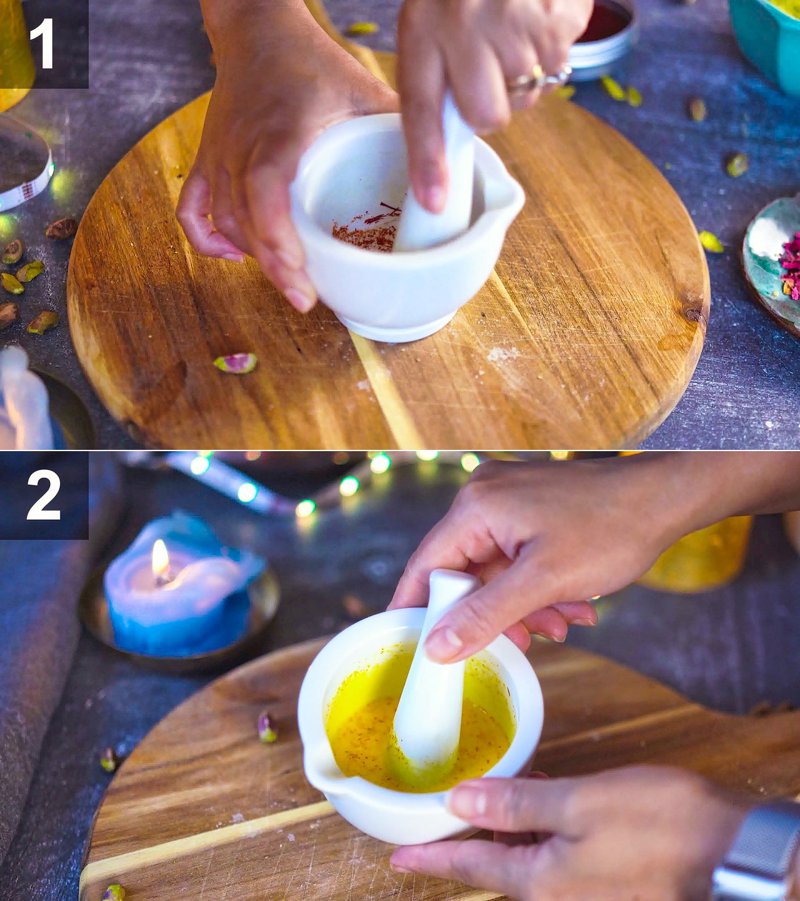
- To prepare saffron-infused milk, add the saffron strands to a mortar and crush them well. Then add the warm milk and let the saffron steep for 5–10 minutes to release its lovely yellow colour and deep aroma.
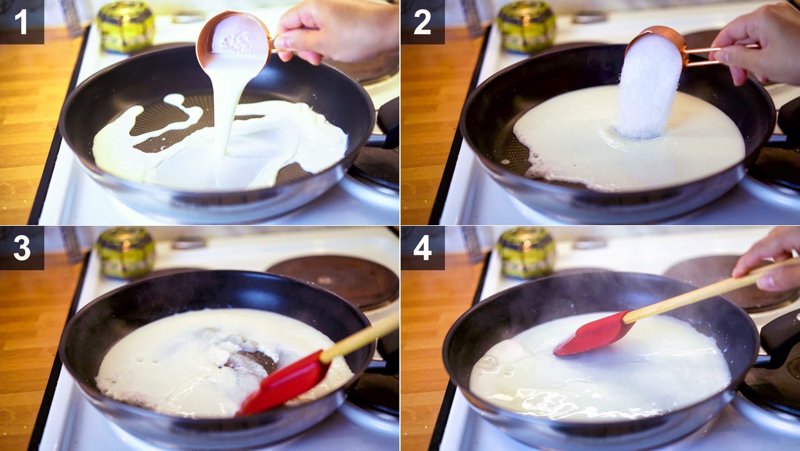
- Pour the whole milk into a non-stick pan along with the sugar. Mix well and heat gently while stirring until the sugar dissolves.
- Now, add the saffron-infused milk and mix everything well. Then add the milk powder and stir until the mixture is smooth and free of lumps.
- Reduce the heat to low and cook, stirring continuously, until the mixture thickens slightly.
- Then add the finely ground walnuts and mix well.
- Keep cooking until the mixture thickens further and starts leaving the sides of the pan. Add the ghee and ground cardamom, then keep stirring until the mixture thickens, pulls away from the sides of the pan, and forms a soft, dough-like consistency.
- To shape the peda, remove the mixture from the heat and let it cool until it is comfortable to touch but is still warm and pliable.
- Lightly grease your palms with ghee. Scoop out 1 tablespoon of walnut mixture and roll it into a smooth ball. Keep shaping until all the dough is used. You will get around 14–15 equal portions.
- While each peda is still slightly warm, gently roll it in the reserved walnut powder to coat the surface evenly and give it some texture.
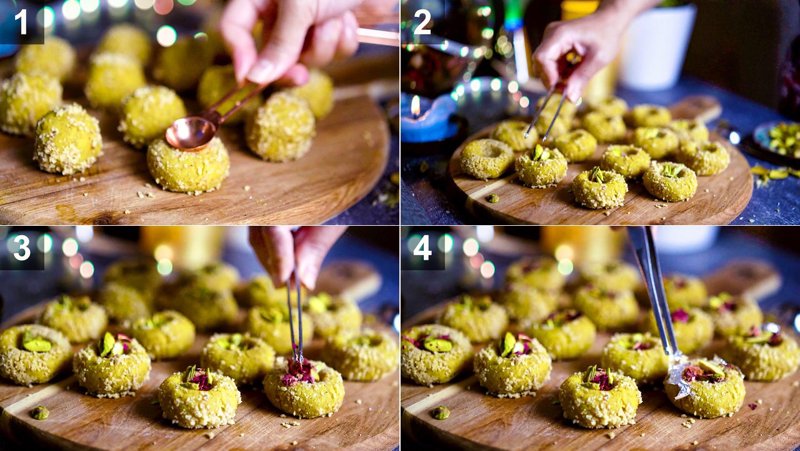
- Now, use the rounded back of a small measuring spoon to press a shallow cavity into the centre of each peda.
- Fill each cavity with some finely chopped pistachios and a few dried rose petals. Arrange the garnish neatly so the green pistachios and pink petals are visible.
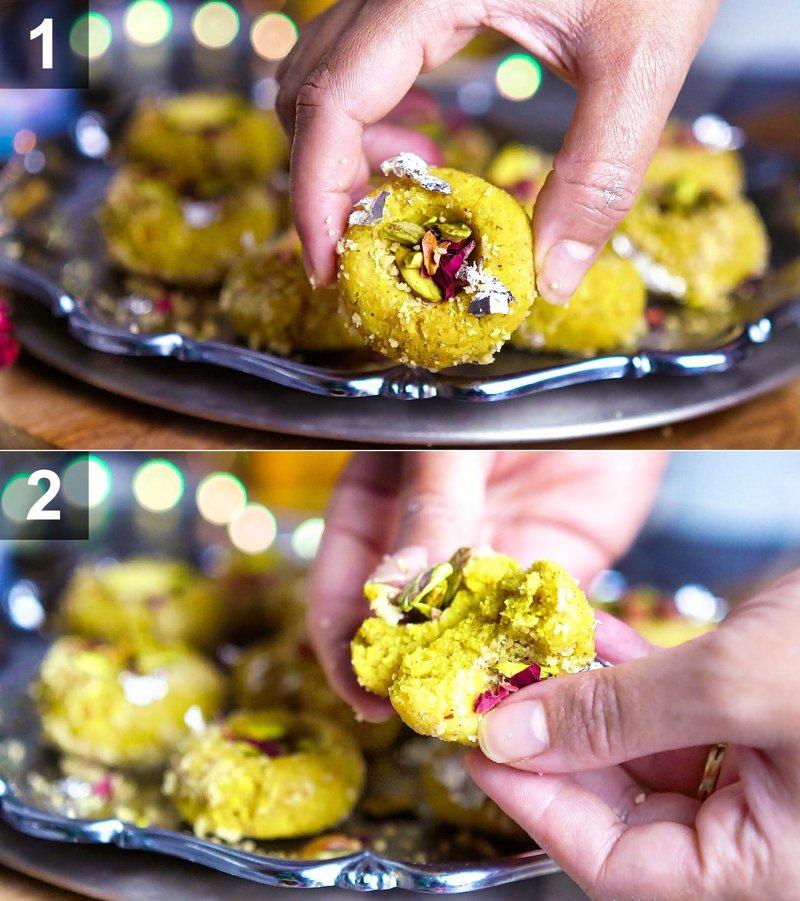
- Finish with edible silver or gold leaf, if using. Let the walnut peda cool completely before transferring them to an airtight container. Enjoy them as an after-meal dessert or with a festive Indian platter of puri, chole masala, lasooni palak, laccha paratha, rasmalai, pineapple raita, lachha onion, roasted papads, and mango lassi.
Variations
Walnut Pistachio Peda
I only topped the peda with sliced pistachios, but you can also turn these into walnut pistachio peda by adding sliced or chopped pistachios to the walnut mixture before shaping the balls.
Optional Garnish
I used rose petals and pistachios only for lovely colours and delicate flavours. Feel free to leave off the rose petals if you prefer a simpler nut garnish.
For a more traditional mithai appearance, you can also garnish these walnut peda with finely chopped almonds or a whole piece of nut coated with silver or gold leaf. You can use a whole silver- or gold-coated almond, whole walnut, or whole cashew. They all make it festive and perfect for holidays and festivals.
Adjust the Flavour
I used saffron and cardamom for flavouring these pedas to give them an aromatic flavour. You can adjust the amount of either to suit your taste buds while keeping the walnut flavour at the centre of the recipe. You can also add a few drops of rose extract, a few drops of kewra water, or a pinch of nutmeg.
Make Different Shapes
Pedas are flattened discs, but you can also make other fun shapes like oval, heart, or cylindrical. You can even make triangles; any fun shapes work. Keep the bites even so they look neat, and adjust the number of servings according to the size and shape you choose.
For a Diwali festive sweets platter, you can shape them into diyas and make the candle tip golden or silver to make them look like an extravagant treat.
Serving Suggestions
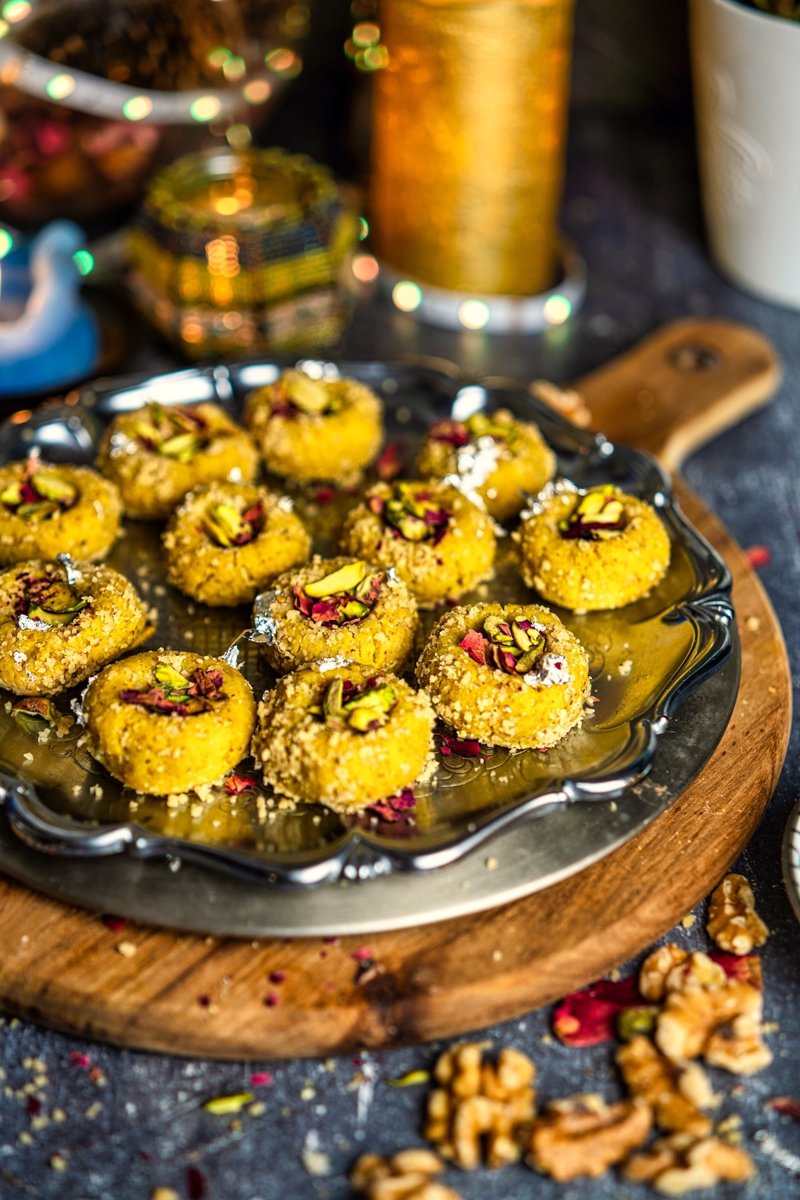
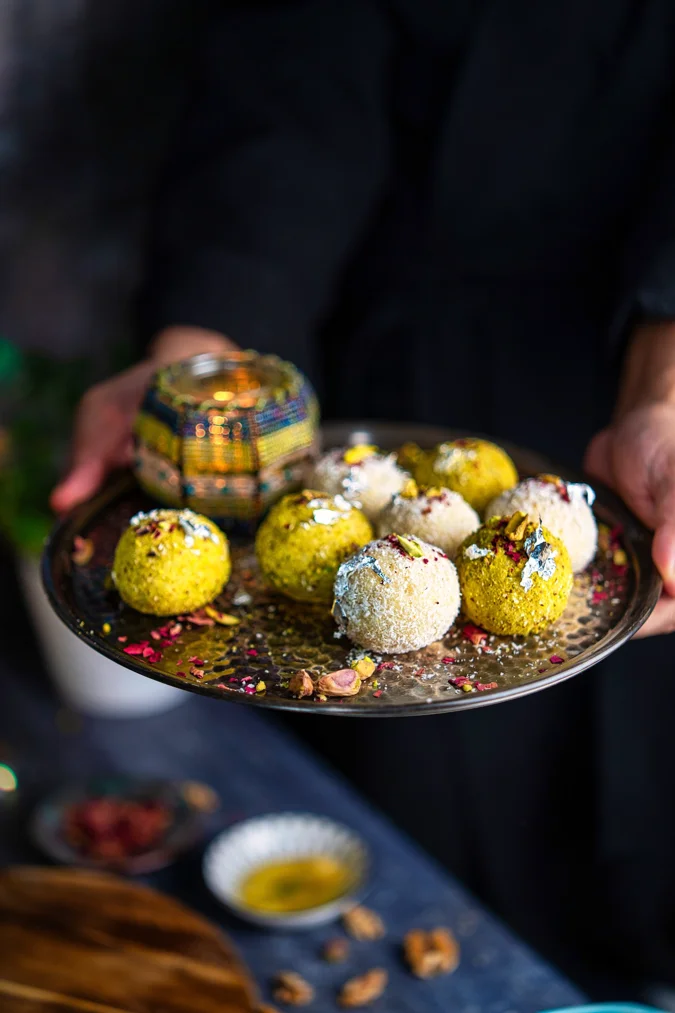
These walnut peda taste delicious on their own when served as dessert or with a cuppa chai and salty snacks for a festive tea-time indulgence. They also make a lovely addition to an Indian sweets platter when served alongside other homemade mithais, such as walnut burfi, malai ladoo,coconut ladoo truffles, gulab jamun, or any of your favourite festive sweets.
They are especially suitable for Diwali, family gatherings, and celebrations. Arrange them on a decorative plate and finish with edible silver or gold leaf for an elegant presentation.
These homemade walnut sweets also make thoughtful festive gifts for friends and relatives. Place them in small paper cases inside a gift box. Just make sure they have cooled completely before packing. Also, keep them refrigerated until transport, and tell the receiver that these need to be refrigerated.
Storage Suggestions
These walnut pedas stay fresh for up to 7 days when stored in an airtight container in the refrigerator.
Before serving, let them sit at room temperature for a short while so they soften slightly and come to room temperature, as I personally find that pedas taste better at room temperature.
Tips & Tricks to Make the Best Walnut Peda
-
Walnuts: Always use toasted walnuts for making walnut peda. They give a deeper, nuttier flavour to the peda. If you don’t have toasted walnuts, then toast them in a pan and let them cool completely before grinding.
-
Grinding: Grind the walnuts in short bursts and stop as soon as they become a fine powder. We only need fine powder for making peda, so don’t over-grind them, as they will release their natural oils and turn the powder into a paste. We want powder here, not paste.
-
Saffron: Crush the saffron strands before soaking them in warm milk, as crushing makes them release more flavour and colour. Also, let them steep for at least 10 minutes to release their colour and aroma.
-
Smooth mixture: We need a lump-free, smooth mixture, so add the milk powder thoroughly into the milk to prevent lumps before adding the ground walnuts.
-
Cooking: Cook the mixture over low heat and keep stirring continuously. You need to cook until it thickens and starts pulling away from the sides of the pan before you remove it from the heat.
-
Cooling: Remember to let the mixture cool until it is comfortable to handle but still pliable. Make sure not to cool it too much, as it becomes too firm, and shaping smooth peda will be more difficult.
-
Walnut coating: I like to coat the peda with finely ground walnut powder. It gives a light, even, walnutty coating with more walnutty flavour. Make sure the walnut is finely ground for the best finish.
-
Cavity: To make a cavity, press a small measuring spoon to create a shallow cavity in each peda. Don’t press it too deeply, as this can weaken the base of the peda.
-
Garnishing: To garnish, I added the pistachios and rose petals neatly while the peda were still slightly pliable. Use the crushed rose petals in small amounts so their floral flavour goes well with the walnuts.
-
Storing: These pedas store well for up to 7 days when stored in an airtight container in the refrigerator. Let the peda cool completely before storing.
FAQ
What is walnut peda made of?
Walnut peda is made using freshly ground walnuts, milk powder, whole milk, sugar, ghee, saffron, and cardamom. This version is an instant version that does not require any mawa and is finished with a walnut powder coating and garnished with sliced pistachios, dried rose petals, and edible silver leaves.
Can I make walnut peda without khoya?
Yes, you can. In fact, this walnut peda recipe uses milk powder and whole milk instead of khoya or mawa. The peda mixture is cooked until it thickens and comes together into a soft dough that can be shaped into smooth pedas.
How do I prevent walnuts from turning into a paste?
Over-grinding can release the walnuts’ natural oils and turn the powder into an oily paste. So, grind the walnuts in short bursts and stop as soon as they become a fine powder.
How do I know when the walnut peda mixture is ready?
The mixture should thicken, come together, and start pulling away from the sides of the pan. You can take a tiny portion and roll it between your thumb and index finger. If it forms a smooth ball, it is ready. It should have a soft, dough-like consistency that can be shaped well once it has cooled slightly.
Can I make walnut peda ahead of time?
Yes, you can definitely make these walnut pedas in advance for celebrations and gatherings and store them in an airtight container in the refrigerator for up to 7 days. For the best taste and quality, consume them within 7 days.
How should I store walnut peda?
Store the cooled peda in an airtight container in the refrigerator. Since they contain milk, storing them in a cool place is suggested. Let them soften slightly at room temperature before serving. You can also enjoy them chilled straight out of the oven.
Can I use other nuts in this peda?
Yes, you can make these pedas with other nuts like almonds, cashews, pistachios, or hazelnuts. You can also use a mix of nuts like walnuts, cashews, and almonds to make this peda.
Are walnut peda suitable for Diwali?
Absolutely, they are perfect for Diwali. Their rich walnut flavour, saffron and cardamom aroma, and colourful garnish make them a lovely addition to a Diwali sweets platter. They are perfect not only for Diwali but also for any other festivals or when you want something sweet. They are also suitable for festive gatherings and homemade gifting.
Walnut Peda Recipe (Step-by-step photo instructions)
How to Make Walnut Peda
- Add the toasted walnuts to a blender and make a fine powder. Avoid over-grinding, as the walnuts can release oil. I am using toasted walnuts here, but if you do not have toasted walnuts, then before grinding them, toast them on low heat for two to three minutes and keep stirring frequently. Let them cool completely before grinding. Reserve 2 tablespoons of finely ground walnuts for coating the finished pedas.
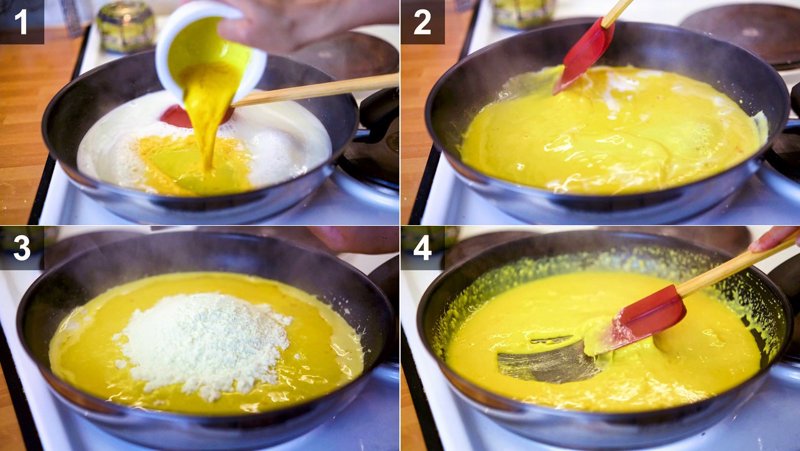
- Add the saffron strands to a mortar and crush well. Then add the warm milk to the mortar and soak the saffron strands in it for 5-10 minutes.
- Pour 3/4 cup into a non-stick pan, also add the sugar and mix well. Heat gently, stirring until the sugar dissolves.
- Then add the saffron infused milk and mix again. Then add in the milk powder, stir until smooth and lump-free. Reduce the heat, and keep cooking over low heat, while stirring continuously, until the mixture thickens slightly.
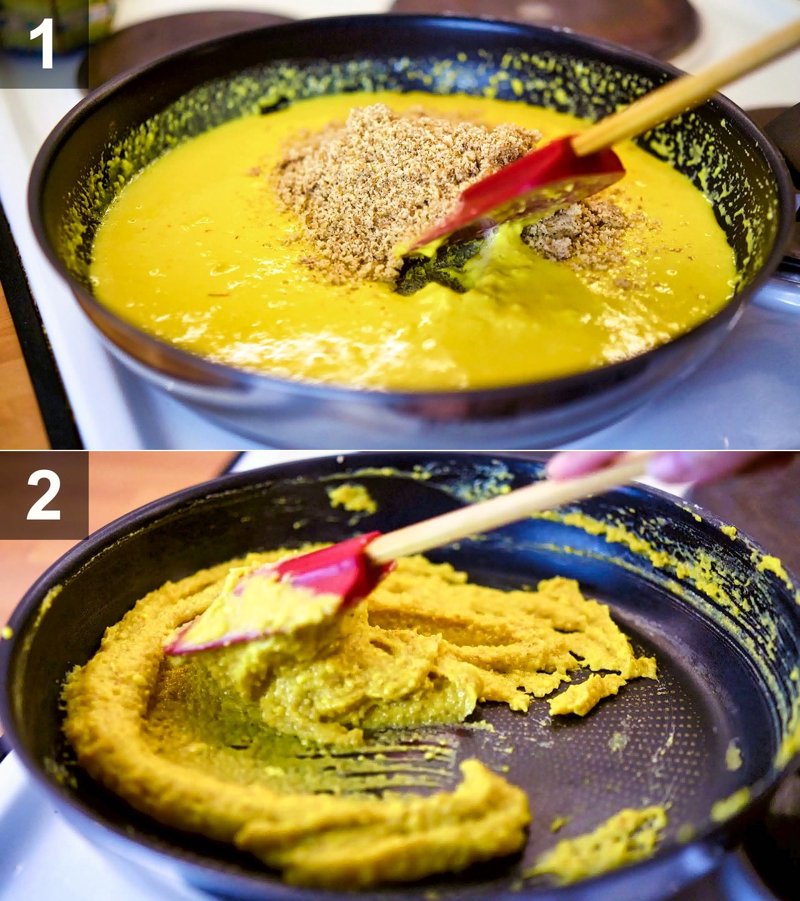
- Add mix in the finely ground walnuts and mix well. Keep cooking until it thickens.
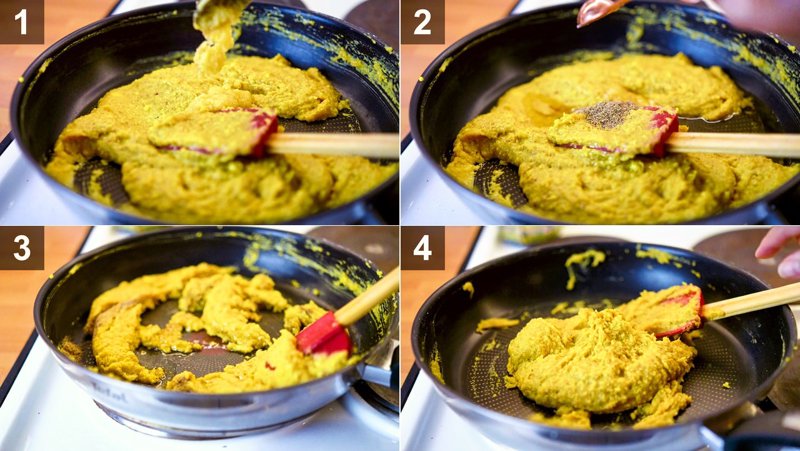
- Then add in ghee and cardamom powder and continue cooking until it starts pulling away from the sides of the pan. Let it cool until comfortable to handle but still pliable.
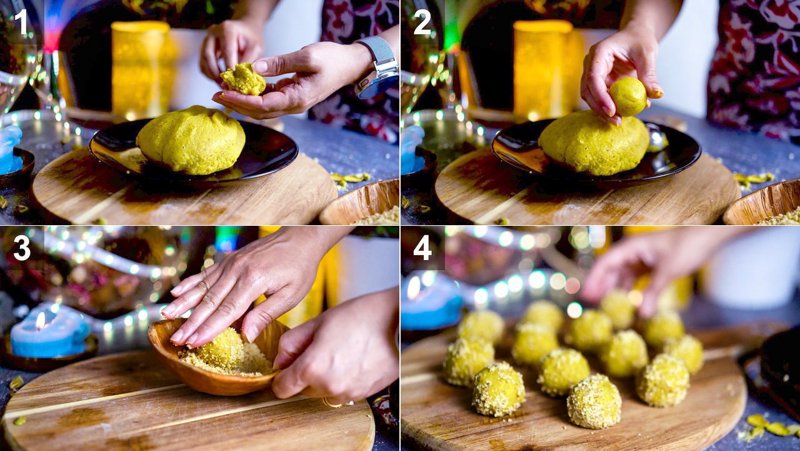
- Lightly grease your palms with ghee. Divide the mixture into 15-16 equal portions, roll each portion into a ball. While each peda is still slightly warm and pliable, gently roll it in the reserved finely ground walnut powder to coat the surface.
- Use the rounded back of a tiny measuring spoon to press a shallow cavity into the centre of each peda. Fill each cavity with finely chopped pistachios and a few dried rose petals. Arrange the garnish neatly so the green pistachios and pink petals are visible. Garnish with edible silver leaves.
- Let the pedas cool completely before transferring them to an airtight container.
Recipe Card
Walnut Peda Recipe [Recipe]
★★★★★
(Rating: 5 from 7 reviews)
| Prep time 🕐 | Cook time 🕐 | Total time 🕐 |
|---|---|---|
| Category ☶ | Cuisine ♨ | Servings ☺ |
| Desserts | Indian | 15 |
| Nutrition Info ⊛ | Serving size ⊚ | |
| 129 calories | 1 |
INGREDIENTS
For the Walnut Peda
- 3/4 cup (120 ml) whole milk
- 1 cup (100 g) milk powder
- ⅓ cup (65–70 g) sugar
- 2 teaspoons (10 g) ghee
- 1 ½ cup walnuts, toasted
- 1/4 cup warm milk for soaking saffron strands
- 10–12 saffron strands
- ¼ teaspoon ground cardamom
For Coating
- ¼ cup finely ground walnuts, or as needed
For Garnishing
- 2 tablespoons finely chopped pistachios
- 1–2 teaspoons dried rose petals
- Edible silver or golden leaves (optional)
INSTRUCTIONS:
How to Make Walnut Peda
- Add the toasted walnuts to a blender and make a fine powder. Avoid over-grinding, as the walnuts can release oil. I am using toasted walnuts here, but if you do not have toasted walnuts, then before grinding them, toast them on low heat for two to three minutes and keep stirring frequently. Let them cool completely before grinding. Reserve 2 tablespoons of finely ground walnuts for coating the finished pedas.
- Add the saffron strands to a mortar and crush well. Then add the warm milk to the mortar and soak the saffron strands in it for 5-10 minutes.
- Pour 3/4 cup into a non-stick pan, also add the sugar and mix well. Heat gently, stirring until the sugar dissolves.
- Then add the saffron infused milk and mix again. Then add in the milk powder, stir until smooth and lump-free. Reduce the heat, and keep cooking over low heat, while stirring continuously, until the mixture thickens slightly.
- Add mix in the finely ground walnuts and mix well. Keep cooking until it thickens.
- Then add in ghee and cardamom powder and continue cooking until it starts pulling away from the sides of the pan. Let it cool until comfortable to handle but still pliable.
- Lightly grease your palms with ghee. Divide the mixture into 15-16 equal portions, roll each portion into a ball. While each peda is still slightly warm and pliable, gently roll it in the reserved finely ground walnut powder to coat the surface.
- Use the rounded back of a tiny measuring spoon to press a shallow cavity into the centre of each peda. Fill each cavity with finely chopped pistachios and a few dried rose petals. Arrange the garnish neatly so the green pistachios and pink petals are visible. Garnish with edible silver leaves.
- Let the pedas cool completely before transferring them to an airtight container.
Watch Full Recipe Video:

NOTES:
- Use finely ground, dry walnut powder rather than walnut paste. A light coating gives the pedas a neat, velvety finish.
- Keep the indentation shallow and wide enough to hold the garnish without weakening the peda.
- Store in an airtight container in the refrigerator and consume within 4–5 days. Let the pedas soften slightly at room temperature before serving.
NUTRITION (Per Serving):
Calories: 129kcal | Fat: 9.3g | Carbohydrates: 9g | Protein: 3.6g | Fiber: 0.6g | Sugar: 7.9g | Sodium: 30.2mg
If this recipe helped you, then please spread the word by sharing and subscribing to us on YouTube to get more such Recipe Videos.

Your feedback is so helpful for me and other My Ginger Garlic Kitchen readers. So, for Facebook and Instagram, please mention @MyGingerGarlicKitchen or #mygingergarlickitchen. I would love to see your photos. :)

Author: Anupama
Recipe Source Link: https://www.mygingergarlickitchen.com/walnut-peda-recipe/
Questions or comments about this recipe:
Ask on